
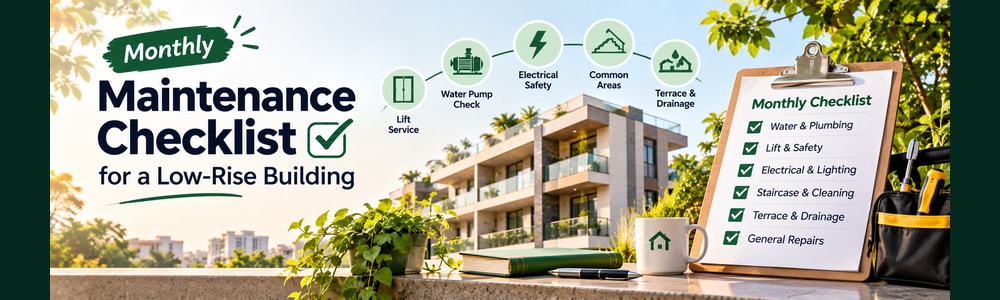
The Monthly Maintenance Checklist for a Low-Rise Building in India
Living in a low-rise independent building or builder floor has its advantages. You get more privacy, fewer neighbours and greater independence.
But there is one responsibility that often gets overlooked: maintaining the building.
Unlike large residential societies with dedicated facility-management teams, many independent buildings in Gurgaon and other Indian cities depend on residents to organise cleaning, repairs, equipment servicing and common-area maintenance.
A water pump may stop working unexpectedly. A staircase light may remain broken for weeks. A blocked rooftop drain may become a serious problem during the monsoon.
The good news is that most of these issues can be managed better with a simple maintenance routine.
In this guide, we have created a practical monthly maintenance checklist for small residential buildings with three to eight households.
Why does a low-rise building need a maintenance checklist?
Without a maintenance schedule, residents usually react only when something breaks.
This creates three common problems:
- Unexpected repair expenses.
- Delays in finding and coordinating service providers.
- Confusion about who is responsible for arranging maintenance.
A monthly checklist helps residents identify small problems before they become expensive repairs.
It also creates a record of what was inspected, what was fixed and what still needs attention.
1. Water pump and water tank maintenance
Water supply is one of the most important shared services in an independent building.
A faulty pump, leaking pipe or poorly maintained water tank can affect every household.
Monthly checklist:
- Check whether the water pump is operating normally.
- Look for visible water leakage around pipes and connections.
- Check for unusual noise, vibration or overheating.
- Inspect the pump area for water accumulation.
- Check the tank exterior and visible fittings for leakage or damage.
- Confirm that the water tank cleaning schedule is being followed.
- Record any repair or servicing completed.
Water-tank cleaning should follow appropriate hygiene guidance and the building's actual usage requirements rather than an arbitrary monthly schedule.
Electrical and mechanical inspections should be performed by qualified professionals.
2. Lift maintenance and safety
Buildings with lifts require particular attention because equipment failures can affect residents' mobility and safety.
Monthly checklist:
- Confirm that scheduled lift servicing has been completed.
- Check whether residents have reported unusual sounds or movement.
- Report faulty buttons, lights or door operation.
- Check that emergency communication arrangements are working.
- Keep the service provider's emergency contact details accessible.
- Record service visits and outstanding recommendations.
Do not attempt to repair lift machinery or safety systems yourself. Use the authorised maintenance provider and follow applicable safety requirements.
3. Staircase and common-area cleaning
Staircases and common entrances are used regularly by residents, visitors and service providers.
Poor maintenance can make these areas unpleasant and potentially unsafe.
Monthly checklist:
- Check whether staircase cleaning is happening as scheduled.
- Inspect common-area lights.
- Check handrails for visible damage or looseness.
- Look for water accumulation or slippery flooring.
- Ensure common passages and exits are not obstructed.
- Check entrance gates and shared access areas.
- Report visible cracks, damage or maintenance concerns.
If cleaning is outsourced, record the service date and payment details.
4. Electrical systems and common lighting
Electrical problems in common areas can create inconvenience and safety risks.
Monthly checklist:
- Check common-area lights and switches.
- Report exposed or damaged wiring.
- Look for signs of overheating near electrical equipment.
- Check common-area electrical meters and accessible panels for visible damage.
- Confirm that emergency lighting works, where installed.
- Review common-area electricity consumption for unusual changes.
Never open electrical panels or carry out electrical repairs without a qualified electrician.
5. Terrace, rooftop and drainage maintenance
Terraces and rooftops are often neglected until water leakage becomes visible inside a home.
This can be particularly troublesome during the monsoon season.
Monthly checklist:
- Check rooftop drains for visible blockage.
- Remove ordinary debris where it is safe to do so.
- Look for signs of water accumulation.
- Inspect accessible areas for visible cracks or damaged waterproofing.
- Check for leakage marks on ceilings and walls.
- Inspect accessible rooftop water tanks and pipe connections.
- Report any structural damage or persistent seepage.
Avoid accessing unsafe rooftop areas or attempting repairs at height without suitable professionals.
6. Plumbing and drainage systems
Small plumbing problems can become expensive when ignored.
A leaking shared pipe may increase water consumption, damage walls or affect multiple households.
Monthly checklist:
- Check visible shared water pipes for leakage.
- Look for damp patches around common plumbing areas.
- Report slow drainage or recurring blockages.
- Check accessible drainage covers.
- Inspect common taps and connections.
- Record recurring plumbing complaints.
Arrange professional inspection if the problem persists or involves concealed pipes.
7. Fire and emergency safety
Emergency equipment should never be treated as a decorative installation.
Where fire-safety equipment or systems are installed, residents should ensure that appropriate inspections and servicing are carried out.
Monthly checklist:
- Check that common escape routes remain unobstructed.
- Ensure emergency contact information is accessible.
- Check visible condition and accessibility of installed fire extinguishers.
- Review servicing and inspection dates.
- Report damaged emergency equipment.
- Make sure residents know how to report an emergency.
Follow applicable fire-safety requirements and the equipment manufacturer's instructions. Do not replace professional inspections with a resident-only visual check.
8. Parking, entrance and shared spaces
The building entrance and parking areas also need regular attention.
Monthly checklist:
- Check entrance gates and locks.
- Inspect common parking areas for obstructions.
- Report damaged paving or loose fixtures.
- Check outside lighting.
- Ensure waste is disposed of appropriately.
- Report any waterlogging or drainage concerns.
These small checks can improve everyday convenience and prevent avoidable problems.
9. Keep a building maintenance record
A checklist is useful only when someone records what has actually been completed.
For every maintenance activity, maintain the following information:
| Information | Example |
|---|---|
| Maintenance task | Water pump servicing |
| Date | 5 November |
| Service provider | Local pump technician |
| Expense | ₹1,500 |
| Status | Completed |
| Next action | Review at next scheduled service |
| Invoice | Receipt attached |
This helps residents understand the building's maintenance history and identify recurring problems.
It also prevents situations where one resident has to search through old WhatsApp messages to find out when the last repair happened.
10. Plan a monthly maintenance budget
Along with inspections, residents should maintain a simple budget for recurring building expenses.
For example:
| Expense category | Illustrative monthly budget |
|---|---|
| Staircase cleaning | ₹1,200 |
| Common electricity | ₹800 |
| Water pump maintenance reserve | ₹1,000 |
| Minor repair reserve | ₹1,000 |
| Total | ₹4,000 |
These figures are illustrative, not standard Gurgaon maintenance rates.
The actual amount should be based on the building's facilities, service contracts and agreed contribution arrangements.
Keep planned reserves separate from actual expenses and record how much money has been collected and spent.
11. How FloorMate can help manage building maintenance
Managing all these activities through phone calls, spreadsheets and WhatsApp conversations can become difficult.
FloorMate is designed specifically for independent builder floors and low-rise buildings where residents manage common responsibilities themselves.
With FloorMate, residents can:
- Record common building expenses.
- Maintain a shared building ledger.
- Coordinate maintenance-related activities.
- Keep building discussions and updates organised.
- Maintain visibility into shared contributions and expenses.
- Organise information about common building work.
Instead of depending on one resident to remember everything, the building can maintain a shared record.
FloorMate's core building-management features are intended to remain free, helping residents organise their buildings without paying for dedicated management software.
Printable monthly low-rise building maintenance checklist
Use this checklist as a starting point for your building.
Water and plumbing
- Check water pump operation.
- Inspect visible pipes and connections.
- Check water tank condition.
- Review tank cleaning requirements.
Lift and electrical
- Confirm scheduled lift servicing.
- Report unusual lift behaviour.
- Inspect common-area lights.
- Report visible electrical damage.
Common areas
- Check staircase cleaning.
- Inspect handrails and flooring.
- Check entrance and parking areas.
- Ensure common passages remain clear.
Terrace and rooftop
- Inspect accessible rooftop drains.
- Check for visible water accumulation.
- Report seepage and waterproofing concerns.
- Inspect accessible tank connections.
Safety and records
- Check emergency contact details.
- Review applicable safety inspection dates.
- Record completed maintenance.
- Update expenses and supporting receipts.
- Review outstanding maintenance requests.
Frequently asked questions
How often should a low-rise building be inspected?
A basic visual review of common areas can be performed monthly. Equipment servicing and specialised inspections should follow manufacturer recommendations, service contracts and applicable safety requirements.
Who should maintain a small independent building?
Residents can agree on a maintenance coordinator or divide responsibilities between households. The arrangement should be documented so everyone understands their role.
What are the most important maintenance tasks in a builder floor?
Water supply, plumbing, electrical safety, common-area cleaning, rooftop drainage and lift servicing (where installed) are important areas to monitor.
How can residents avoid unexpected maintenance expenses?
Regular inspections, scheduled servicing, reliable vendors and a planned repair reserve can help reduce the likelihood of unexpected costs.
Can building maintenance be managed without an RWA?
Yes, residents can coordinate many everyday maintenance activities through agreed responsibilities, shared records and a suitable communication process, subject to applicable legal requirements.
Final thoughts
A well-maintained building does not happen by accident. It requires small, consistent efforts from the people who live there.
Instead of waiting for the next pump failure, lift breakdown or terrace leak, establish a simple monthly routine and keep a record of completed work.
When responsibilities are clear and maintenance information is accessible, building management becomes much easier.
FloorMate helps neighbours organise building maintenance, shared expenses and everyday coordination—all in one place, with core building-management features that remain free.